
What clocking is, and why it still happens
Clocking means altering a car’s odometer so it shows fewer miles than the car has actually covered. Older cars had mechanical dials that had to be physically wound back. Today’s cars store the mileage digitally, and a “mileage correction” tool plugged into the diagnostic port under the dashboard can rewrite it in minutes. These tools are sold openly, because there are legal reasons to correct a reading, such as replacing a faulty instrument cluster.
Selling a car without disclosing that its mileage is wrong is a criminal offence in the UK. That does not stop it, because mileage is one of the biggest factors in a used car’s value. Knocking 40,000 miles off a family hatchback can add well over a thousand pounds to the price, and it also hides the wear and the service jobs that come with those miles.
Who gets caught out
Start with the MOT mileage trail
Every MOT test in Britain records the mileage on the day, and those readings are kept for the life of the car. For any car over three years old this is the single most useful check, and you can do it from your sofa with the registration number. Read the figures in date order and look for four things.
A reading that goes down. The clearest sign. A mileage that is lower at a later test than an earlier one has no innocent explanation beyond a tester typo, and typos are rare.
A flat stretch. Two or three tests a year apart with almost the same mileage on a car that is otherwise used daily. Either it was off the road, or the odometer was wound back between tests.
A sudden change of pace. Twenty thousand miles a year for four years, then two thousand. Ask what changed. Retirement happens, but so does clocking before a sale.
A gap in tests. A missing year means a missing data point, and a missing data point is where a big correction can hide.
| MOT test | Recorded mileage | Change |
|---|---|---|
| Mar 2022 | 61,480 | |
| Mar 2023 | 74,910 | +13,430 |
| Apr 2024 | 88,250 | +13,340 |
| Apr 2025 | 52,300 | −35,950 |
An example trail. The fourth reading is lower than the third: the car was advertised at 52,000 miles having already passed 88,000.
The trail only starts at the car’s first MOT, so a two-year-old car has no MOT history yet. For young cars the service history and the dealer’s own records carry more weight. Our guide to reading MOT history covers what the rest of the record tells you.
Cross-check the paperwork
A clocker can change the dashboard. They usually cannot change the documents that have already left the car.
Service history. Every stamp or digital entry carries a mileage. Lay them next to the MOT readings in date order. They should climb together.
Old MOT certificates and invoices. Tyre, brake and cambelt invoices all record the mileage on the day. One from a few years ago that is higher than the odometer today ends the conversation.
The V5C and the number of keepers. Several keepers in a short time with low total mileage is a mismatch worth questioning. Cars that change hands often tend to be driven, not parked.
Sale adverts. Search the registration. Dealers and auction sites often leave old listings up, mileage included.
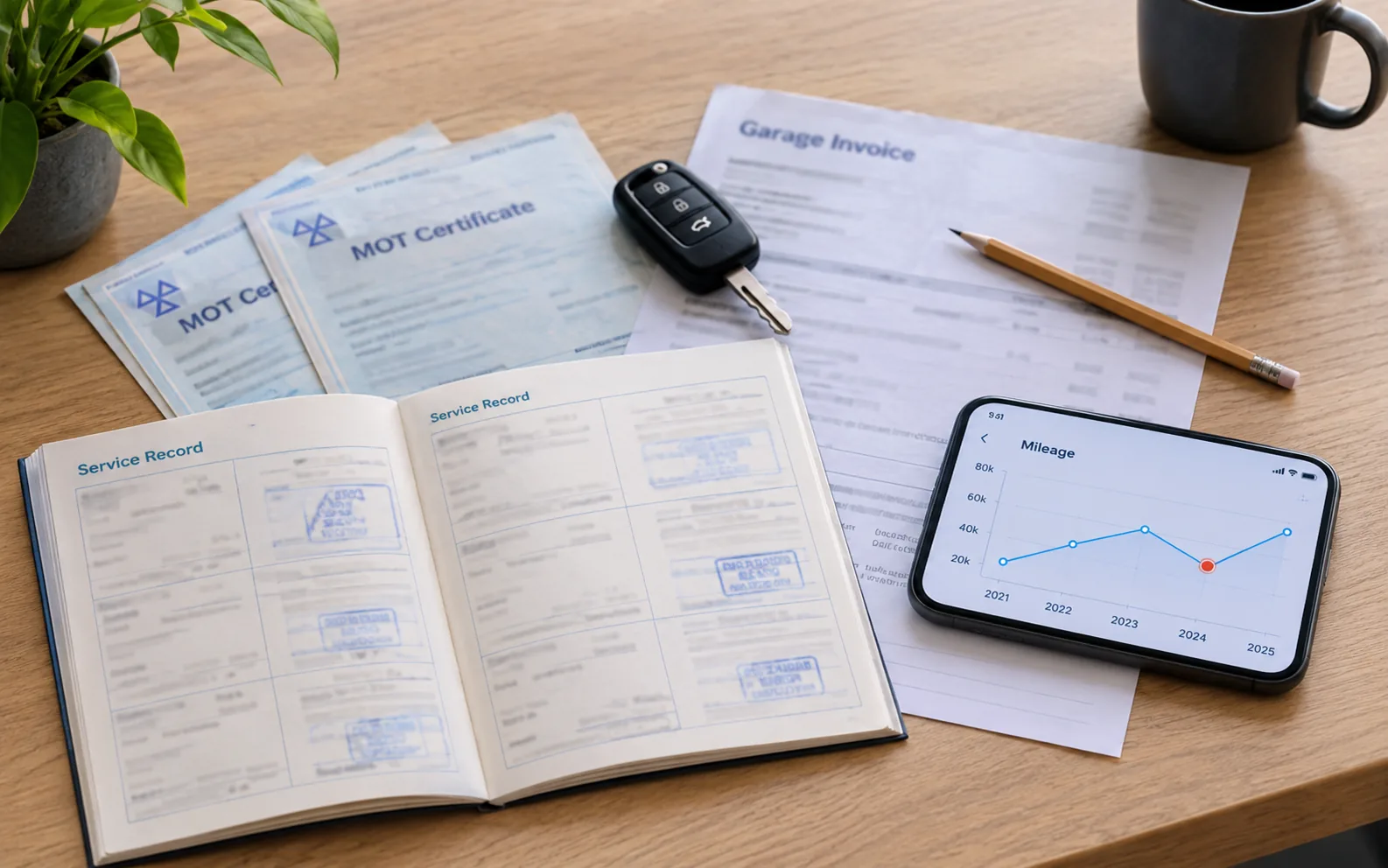
Lay every mileage you can find in date order. The one that breaks the line is the one to ask about.
Cars with a digital service book are harder to clock convincingly, because each visit to a franchised workshop is stored by the manufacturer with the mileage attached, outside the seller’s reach.
Read the wear on the car
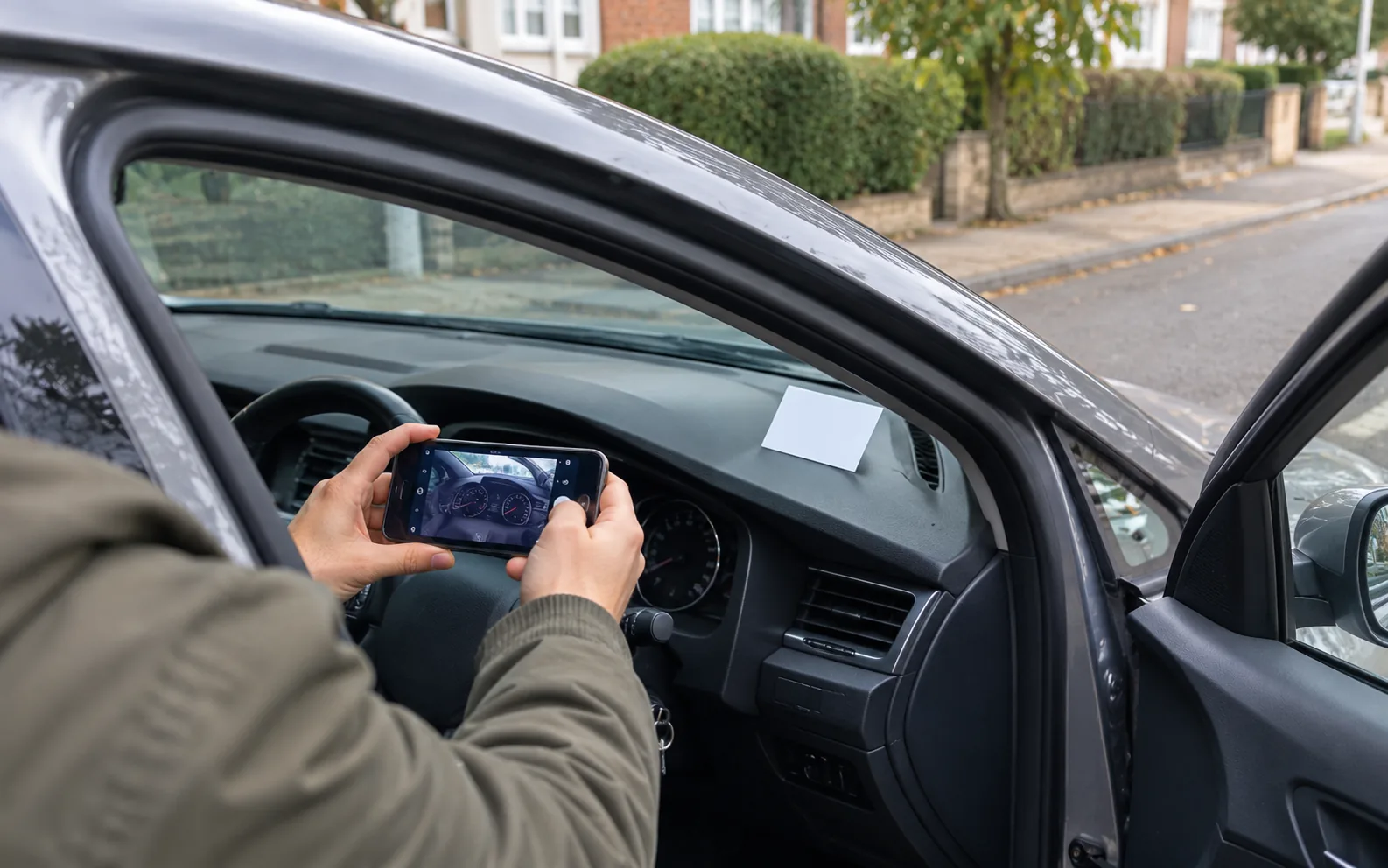
Miles leave marks. A car that has genuinely covered 30,000 miles feels and looks different from one that has done 130,000, however carefully it has been valeted. Sit in the driver’s seat and look at the parts a driver touches every day.
Looks like more miles than the clock says
- Steering wheel shiny or worn smooth at ten and two
- Pedal rubbers worn through or recently replaced
- Driver's seat bolster flattened or split
- Gear knob, indicator stalk and window switches polished by use
- Stone chips across the bonnet and headlights
- Brand-new pedals, mats or seat covers on a car sold as low mileage
Consistent with a genuine low-mileage car
- Factory tyres still fitted, with matching brands and even wear
- Original brake discs with a small lip at the edge
- Crisp lettering on the buttons and a firm seat base
- Light, even wear that matches the age of the car
The newest parts are the biggest clue
Do the mileage maths
The average car in the UK covers roughly 7,000 miles a year, and company or commuter cars often do double that. Take the car’s age in years, multiply by 7,000, and compare it with the odometer. A ten-year-old car showing 35,000 miles is possible, but it needs a story: one elderly owner, a second car, long periods off the road. If the seller cannot tell that story with paperwork to back it up, assume the simpler explanation.
Also compare the mileage with the number of keepers and with the car’s first use. A former company car, hire car or taxi will have covered a lot of ground early in its life, whatever the clock says now.
If you think a car has been clocked
Walk away. There is no price at which a clocked car is a bargain, because you cannot know what else has been hidden and you will face the same questions when you come to sell it. If you have already bought the car, you have rights under consumer law against a dealer, and in either case you can report the seller to Trading Standards through Citizens Advice.
The simplest protection is to run the checks before you view. An AnalyzeMyCar report lays out the mileage recorded at every MOT test on one timeline, alongside the service records where the manufacturer holds them, so a drop or a flat stretch is visible before you have spent a Saturday travelling to see the car. Then use our used car checklist for the viewing itself.