
What decides the bill
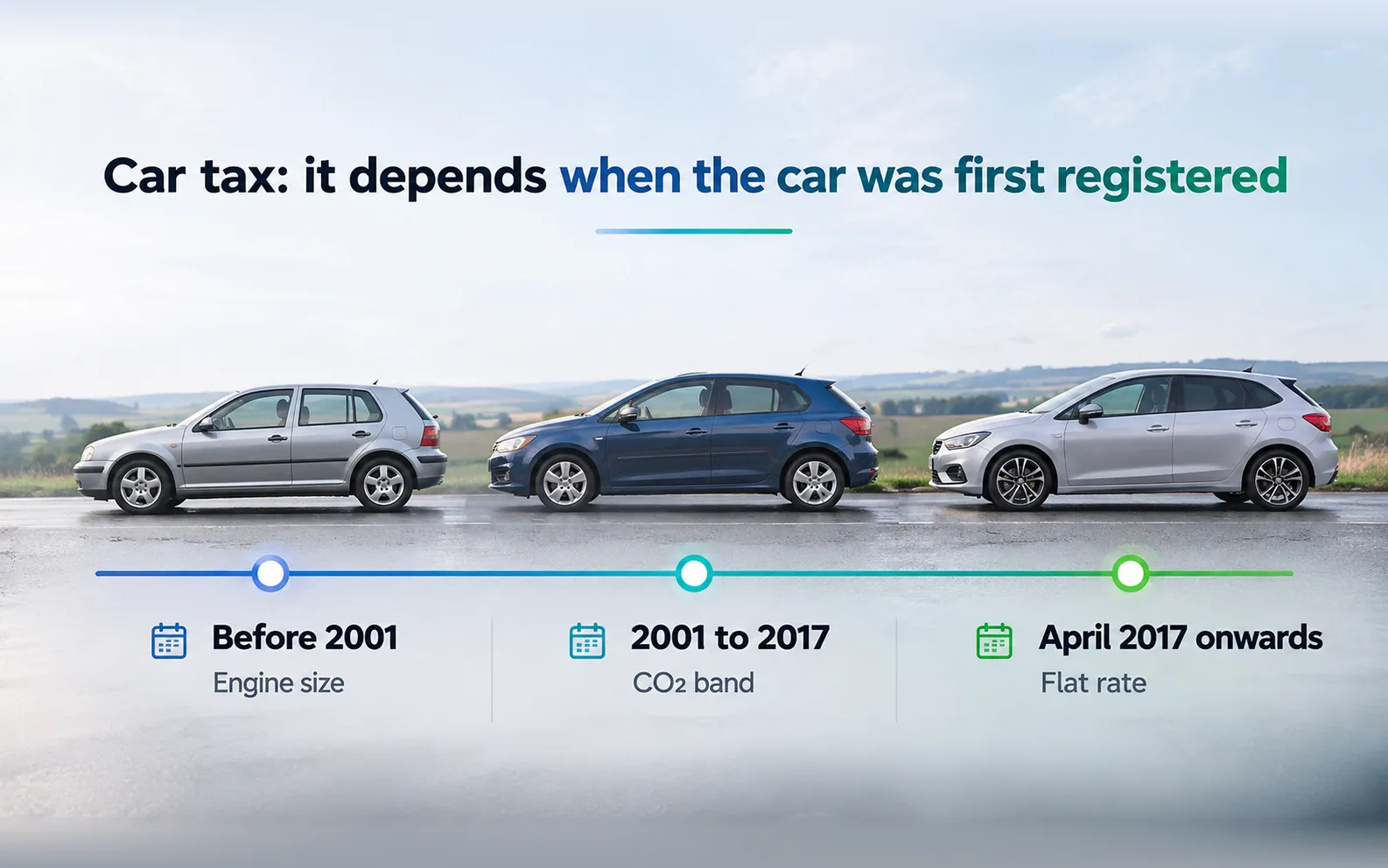
Date of first registration. Three different systems apply depending on whether the car was first registered before March 2001, between March 2001 and March 2017, or from April 2017 onwards.
CO2 emissions. The official figure from when the car was new. It sets the band for 2001 to 2017 cars and the first-year rate for newer ones.
Fuel type. Petrol, diesel, hybrid or electric. Newer diesels that miss the latest emissions standard pay a higher first-year rate, and since April 2025 electric cars pay too.
List price when new. Cars registered from April 2017 that cost more than £40,000 new pay an extra supplement in years two to six, whoever owns them by then.
Where to find the figures
Cars first registered on or after 1 April 2017
This is most of the used market now, and it is the simplest system once you know the shape of it.
First year: based on CO2. Paid once, usually inside the on-the-road price. It runs from nothing for zero-emission cars to several thousand pounds for the thirstiest, and non-RDE2 diesels pay one band higher.
Years two onwards: one flat standard rate. The same for a small petrol hatchback and a large petrol SUV. For 2025/26 it is £195 a year, and it is uprated most Aprils.
The expensive car supplement. If the list price was over £40,000, including options, add £425 a year (2025/26) for the second to sixth years. On a four-year-old car that is two more years of supplement for the next owner.
Electric cars. Zero-rated until April 2025. Since then an EV pays the standard rate like everyone else, and an EV first registered from April 2025 with a list price over £40,000 also pays the supplement.
Cars first registered 1 March 2001 to 31 March 2017
These cars are taxed on CO2 bands for their whole life. That is why small, efficient cars from this era were so popular: many sat in band A and paid nothing at all until April 2025, when band A moved to the band B rate.
| Band | CO2 (g/km) | Annual rate, 2025/26 |
|---|---|---|
| A | up to 100 | £20 |
| B | 101 to 110 | £20 |
| C | 111 to 120 | £35 |
| D | 121 to 130 | £165 |
| E | 131 to 140 | £195 |
| F | 141 to 150 | £215 |
| G | 151 to 165 | £265 |
| H | 166 to 175 | £315 |
| I | 176 to 185 | £345 |
| J | 186 to 200 | £395 |
| K | 201 to 225 | £430 |
| L | 226 to 255 | £735 |
| M | over 255 | £760 |
Cars first registered 1 March 2001 to 31 March 2017, standard annual rates for 2025/26. Rates are usually uprated each April, so treat these as the shape of the system rather than next year’s bill.
The band is fixed for the life of the car, so a 2014 diesel in band B stays cheap however old it gets, and a 2008 V6 in band M stays expensive.
Older cars and the exemptions
Cars first registered before 1 March 2001 have no official CO2 figure, so they are taxed on engine size: one rate up to 1,549cc and a higher one above it. Once a car reaches forty years old it can be registered as a historic vehicle and pays nothing, though you still have to apply and still have to “tax” it each year at the zero rate.
Cars used by, or for, a qualifying disabled person can be exempt. And a car that is kept off the road under a SORN pays nothing, but cannot be driven or parked on a public road at all.
Tax when you buy a used car
Tax never comes with the car. The seller's tax ends on the day of sale and they get the full remaining months back. You must tax it before you drive it away, which takes two minutes with the new-keeper slip.
Count the supplement years. For a car registered from April 2017 with a list price over £40,000, work out how many of the years two to six are left. Two years left is over £800 on top of the standard rate.
Compare across the 2017 line. A frugal 2016 car in band A or B costs £20 a year. The same model registered a year later costs the full standard rate. For a small car that gap is worth checking before you choose between them.
Mind the diesel first-year rate. It only applies to the first owner, so it is not your cost on a used car, but it is a clue that the car is a pre-RDE2 diesel, which can matter for clean-air zones.
Paying monthly costs more. Monthly or six-monthly direct debit adds a surcharge of around five percent. Annual is cheapest if you can.
The £40,000 trap on nearly-new cars
How to check a car's tax before you buy
You need three things: the date of first registration, the CO2 figure and the fuel type. Put them against the systems above and you have the standard rate. For a car registered from April 2017, also ask the seller for the original list price or look up the model and trim to see whether it crossed £40,000.
An AnalyzeMyCar report shows the registration date, CO2 emissions, tax band and the current 12-month tax figure for any registration, alongside the MOT history and mileage trail, so the tax question is answered in the same place as the rest of your pre-purchase checks. If you are the one selling, remember that your tax ends on the day of sale and the refund comes to you automatically.