
Private sale against the alternatives
Three ways to turn a car into money, and what each one really costs you.
| Route | Upside | Cost |
|---|---|---|
| Private sale | Highest price, usually several hundred pounds more than a trade offer on a typical family car | Your time: advert, messages, viewings, paperwork, and the risk of scams |
| Part-exchange | Convenient, and the value comes straight off the new car | The lowest figure. The dealer prices in reconditioning and their margin |
| Online car buyer | Fast, collected from your door, cash in days | Often a lower final offer after the inspection than the one quoted online |
If the car is worth a few hundred pounds, the convenience of a part-exchange or an instant buyer may be worth more than the difference. Above that, a few evenings of effort is usually the best-paid work you will do this month.
Set the price from evidence, not hope
Start with what the car is actually worth. A proper valuation gives you three figures: the trade price a dealer would pay, the retail price a dealer would ask, and the private price in between. Private buyers expect to pay less than a forecourt because they get no warranty, so aim between the trade and retail figures, and nearer retail if your car has a full history and low mileage for its age.
Then look at the adverts for the same model, year and mileage within fifty miles. Ignore the outliers at both ends. Your price should sit with the well-presented cars, and your advert should show why.
Mileage and history move the price most
Prepare the car, then the paperwork
Fix the cheap, visible things. Kerbed wheels, bumper scuffs and a split seat seam each knock far more off a buyer's offer than they cost to put right. A photo-based repair estimate shows what is worth doing before you list.
Sort the MOT and service. A car with ten months of MOT and a service stamp from last month sells faster and for more than one with both due. If the MOT has under three months left, a fresh test is usually worth the fee.
Clean it like you mean it. Inside and out, including the boot and engine bay. Buyers read a clean car as a cared-for car, and the photos will be better.
A repair estimate from photos is a quick way to decide which jobs pay for themselves. Then get the paperwork into one folder:
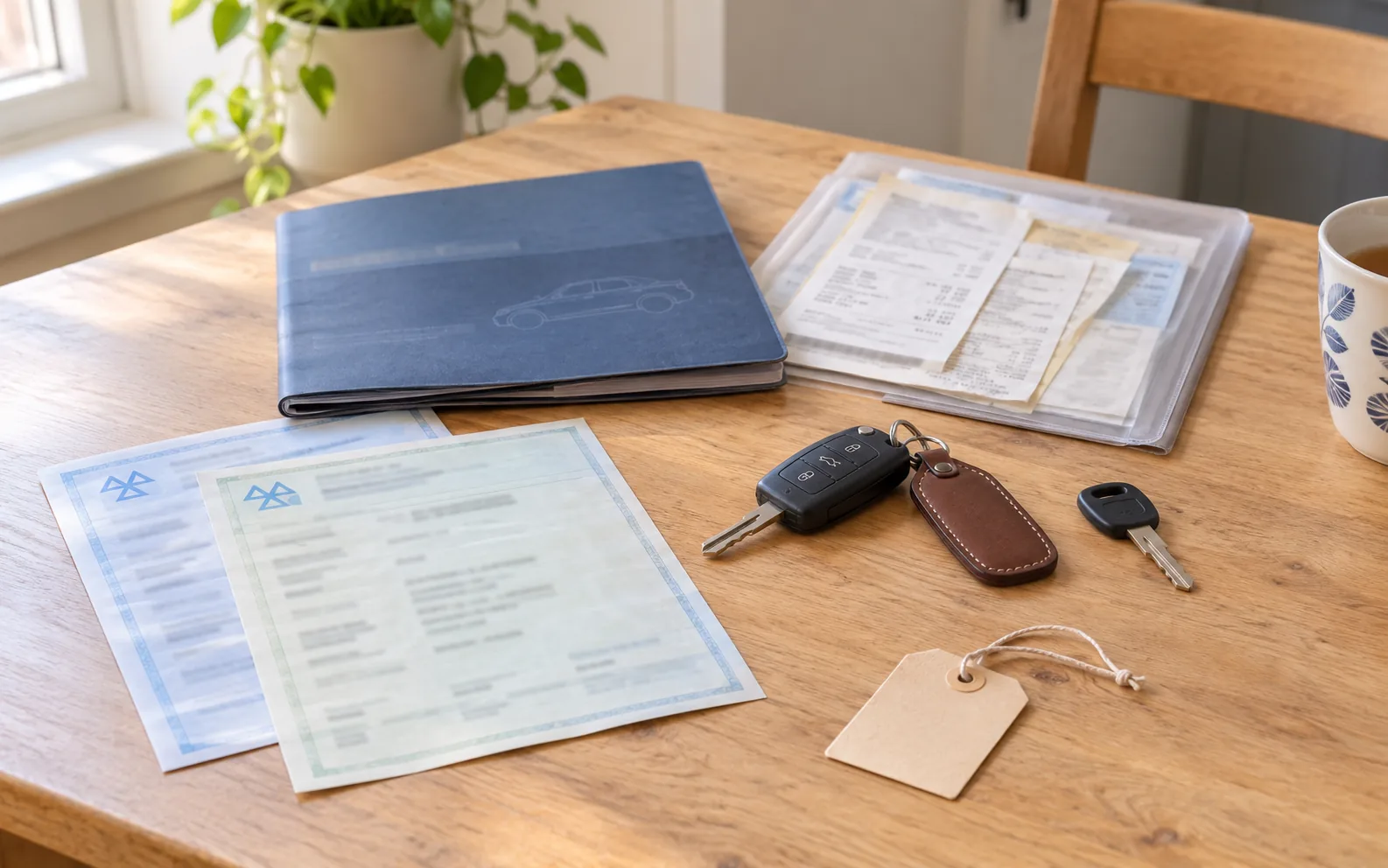
V5C logbook in your name, at your address. If it is missing, apply for a replacement before you advertise.
MOT certificates and service history including invoices for tyres, brakes, cambelt and any big jobs. Lay them out in date order.
Both keys, the handbook and any extras such as the locking wheel nut key, the parcel shelf and the charging cable on an EV.
Your own history report so a buyer can see the MOT and mileage trail you are describing, and so there are no surprises when they run one themselves.
Write an advert that answers the buyer's questions
Photos first. At least twelve, in daylight, on a plain background: the four sides, the four corners, dashboard with the mileage showing, seats, boot and engine bay. Then any damage, close up and honest.
Headline with the facts buyers filter on. Make, model, trim, engine, year, mileage. Not “stunning” or “first to see will buy”.
State the numbers. Mileage, number of previous keepers, MOT expiry date, service history, and whether it has had any bodywork. Buyers will check all of these, so being right earns trust.
Give a reason for selling. A plain one, in one line. “New company car” or “need something bigger” answers the question every buyer is quietly asking.
Price with a little room. List slightly above the figure you want and say “no offers” only if you mean it. Most private buyers expect to negotiate a small amount.
Honesty is the cheapest sales tool
Viewings, test drives and getting paid
Most private buyers are exactly what they seem. The few who are not follow patterns, and the patterns are easy to spot once you know them.
View at home, in daylight. Never in a car park at night. Have someone with you and let the buyer see the paperwork at the kitchen table, not on the pavement.
Check their insurance before a test drive. The buyer must be insured to drive your car, either on their own policy with cover for other cars or a short-term policy. Ask to see it, take a photo of their licence, and go with them.
Accept a bank transfer, then wait. Watch the money arrive in your own banking app on your own phone before the keys change hands. Screenshots, emails from a “payment service” and cheques prove nothing.
Know the scams. Overpayment with a request to refund the difference, a “courier” who will collect on the buyer's behalf, pressure to use an escrow site you have never heard of, and requests for your V5C details before a viewing. Each one ends the conversation.
On the negotiation itself: decide your lowest acceptable figure before the first viewing and do not go below it on the day. Buyers who point at every stone chip are testing you, not the car. If you have priced from evidence and the paperwork backs it up, you can hold your number.
The handover, done properly
Tell DVLA straight away. Do it online while the buyer is still there, or fill in the new keeper section of the V5C and send it. Until DVLA knows, any fine or ticket the car collects comes to you.
Give the buyer the green new-keeper slip. They need it to tax the car before they drive it away. Road tax does not pass with the car; you get the remaining full months refunded automatically.
Write a receipt, two copies. Date, price, registration, mileage, both names and addresses, and the words “sold as seen, tried and approved without guarantee”. Both of you sign both copies.
Cancel your insurance and the direct debit. Once the money has cleared and the car has gone. Keep your copy of the receipt and the DVLA confirmation.
The whole process takes less time than it reads. Price from evidence, fix what pays, photograph it in daylight, and let the paperwork do the persuading. If you want the mileage and MOT story laid out for buyers before they ask, run an AnalyzeMyCar report on your own registration and keep it in the folder with the receipts.