
years until the first MOT
roughly fail first time
avg miles a UK car does a year
What MOT history actually is
In England, Scotland and Wales, a car needs its first MOT test once it turns three years old, and then every year after that. The test checks the things that keep a car safe and legal on the road - brakes, tyres, lights, steering, suspension, seatbelts and emissions among them.
The part most people miss: the full test history is free and public. Enter a registration on the government MOT service and you can see every test a car has taken - the date, the result, the recorded mileage, and every defect noted along the way, going back years. It is, in effect, a health diary for the vehicle.
Where to find it
How to read a single result
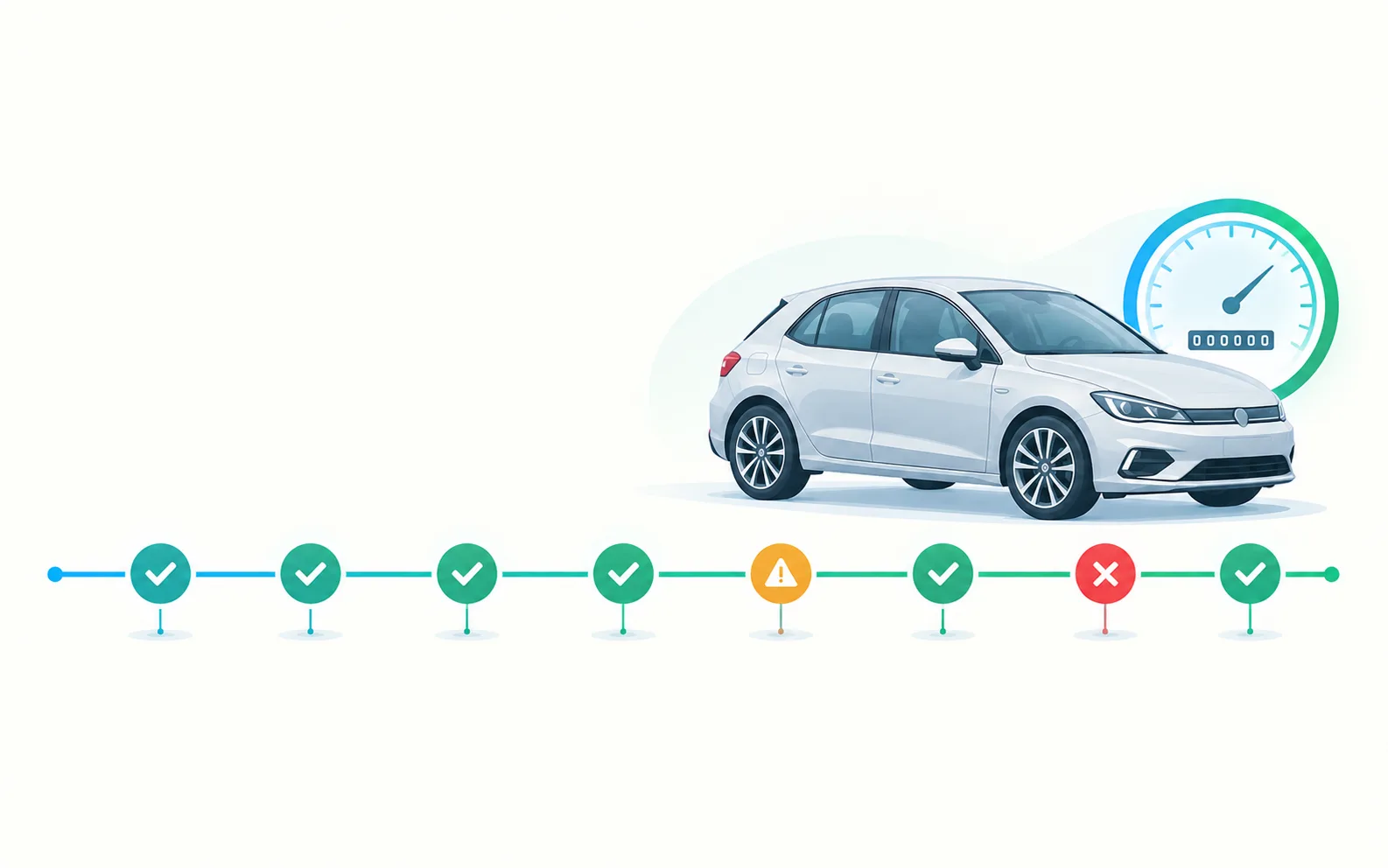
Each test comes back as a straightforward Pass or Fail. But the real information is in the defects, which the tester grades into four levels. Two of them fail the car; two don't - but all four are worth reading.
A direct, immediate risk to safety or the environment. The car should not be driven until it's fixed.
Could affect safety or the environment. It fails the test and must be repaired, then retested.
No immediate safety risk, but should be sorted soon. It does not fail the test.
Something starting to wear that will likely need attention before the next test.
A “pass with advisories” is completely normal, especially on an older car. It is not a warning that the car failed - but those advisories are exactly where the story starts.
Advisories: the tester's early warnings
An advisory is the tester saying “this is fine today, but keep an eye on it.” Read across several years, advisories tell you what a car is going to cost you next. The common ones and what they hint at:
- Tyres close to the legal limit - budget for new tyres soon.
- Brake discs or pads worn - a normal wear item - but track how fast it’s wearing.
- Corrosion near structural areas - can get expensive; a repeated corrosion advisory is a real warning.
- A slight oil leak - monitor it - a leak that grows year on year is a flag.
- Play in a suspension joint - a future repair waiting to happen.
One advisory on its own is rarely a dealbreaker. What matters is the pattern - and that's what the next two sections are about.
The mileage check hiding in plain sight
Here's the most powerful part. The odometer reading is recorded at every single test. Line those readings up and the MOT history becomes a timeline of the car's mileage - year by year.
That timeline is the simplest way to catch “clocking” - winding the mileage back to make a car look less used. It's illegal, but it happens. If a later test shows fewer miles than an earlier one, or an implausibly small jump for the time that passed, something is wrong.
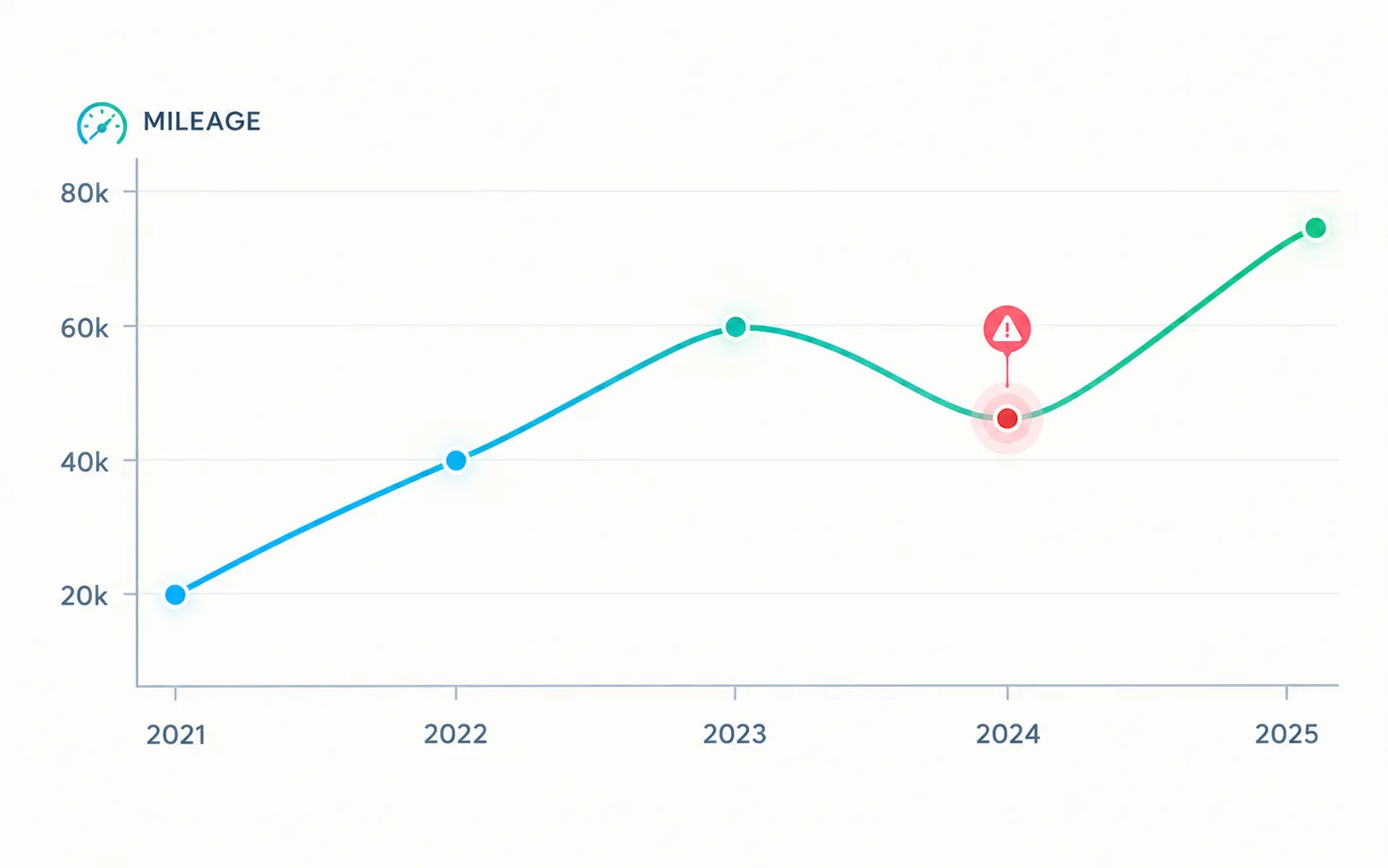
The timeline also shows how hard a car was used. A vehicle that has covered around 7,000 miles a year - the UK average - is a very different prospect from one that's done double that, even if they're the “same” model and year.
Red flags to watch for
When you're looking at a car's history before buying, these are the patterns that should make you pause and ask questions:
Mileage that drops between tests, or barely moves for a year - a classic sign of clocking or an unexplained gap.
The same defect advised or failed year after year - a problem that keeps coming back and may never have been fixed properly.
A long stretch with no test at all - worth asking whether the car was declared off-road (SORN), or simply neglected.
A recent test suddenly covered in advisories - the car may have been run down in the months before sale.
Several failures clustered close together - a vehicle that is becoming expensive to keep on the road.
The bottom line
The full history, read for you
GOV.UK gives you the raw list of tests. The work is in interpreting it - spotting the mileage that doesn't add up, the defect that keeps returning, the advisory trend that's heading the wrong way.
That's what AnalyzeMyCar does. We pull the complete MOT history and surface what it means - mileage consistency, recurring defects and advisory patterns - alongside official vehicle records, AutoDAP service records, true market valuation and AI condition analysis, all in one report. So instead of scrolling a table of tests, you get a plain answer: here's what this car's history is really telling you.