
Back to the hub

How Often Should a Car Be Serviced?

The simple answer, and what missed services mean for buyers.

The short answer: most cars need a service every 12 months or every 10,000–12,000 miles, whichever comes first. But the right answer for your car depends on its make, age and how it’s driven. And if you’re buying used, how often it was serviced tells you a lot about how it’s been treated.

Published 7 Oct 2026

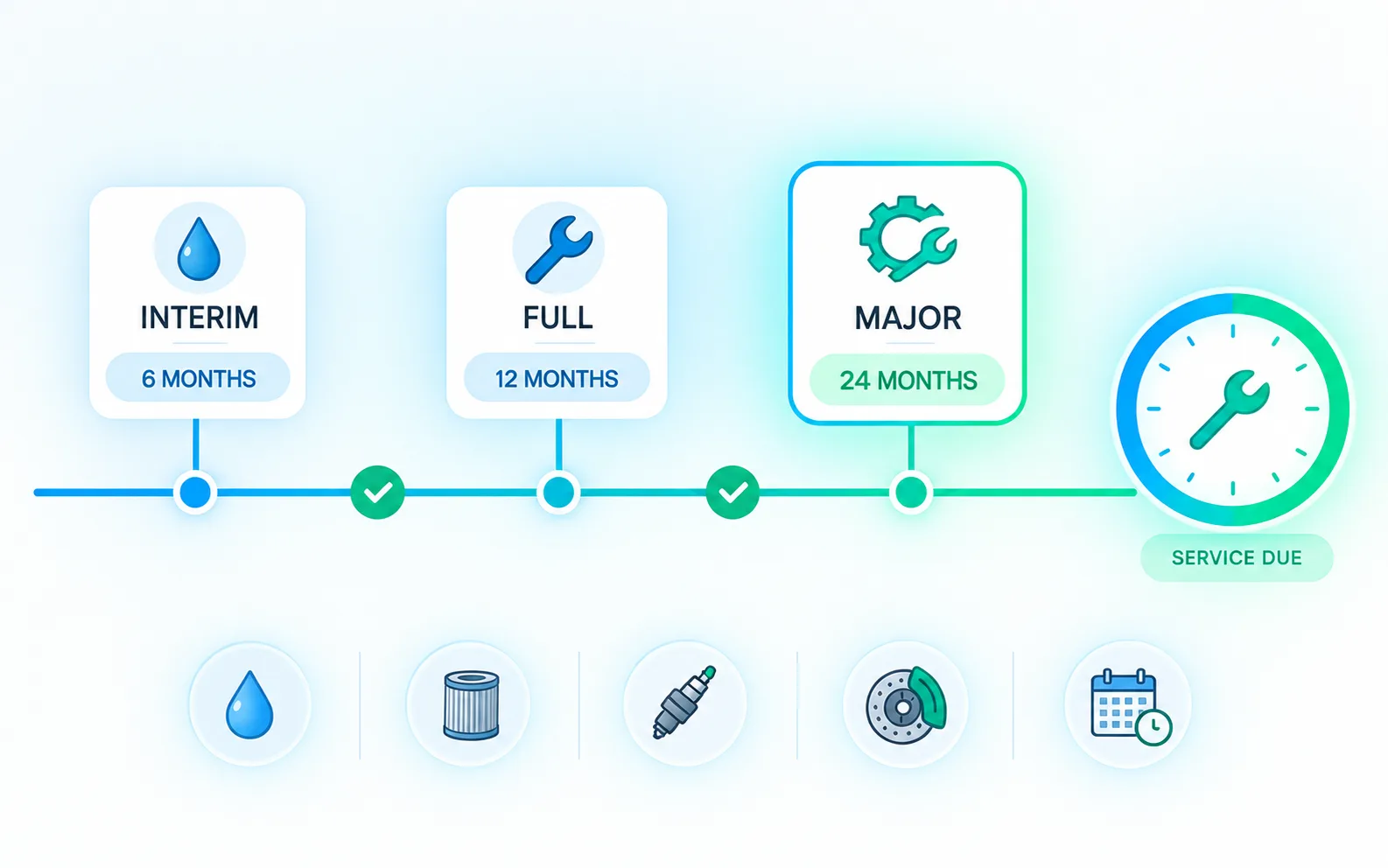
A service timeline showing an interim service at 6 months, a full service at 12 months and a major service at 24 months

Quick answer

Most cars need a service every 12 months or every 10,000–12,000 miles, whichever comes first, though the exact interval depends on the make, age and how it's driven. If you're buying used, a regular, complete service history is a strong sign the car has been looked after.
01

The three common types of service

ServiceTypical intervalWhat’s usually included
InterimEvery 6 months or 6,000 milesOil and oil filter change, basic safety checks. Good for high-mileage drivers
FullEvery 12 months or 12,000 milesEverything in an interim, plus air filter, more detailed checks of brakes, suspension, steering and more
MajorEvery 24 months or 24,000 milesEverything in a full service, plus items such as spark plugs, fuel filter, brake fluid and pollen filter, depending on the car
02

Fixed vs variable service schedules

Many modern cars use one of two systems:

  • Fixed: a service at set times and mileages, for example every 12 months or 10,000 miles.

  • Variable (often called “long-life”): the car monitors how it’s driven and tells you when a service is due. For gentle, long-distance driving, this can stretch to two years. Short trips and town driving bring it forward.

Don't ignore the service light

A warning light or message on the dashboard usually tells you when a service is due.
03

Things that don't follow the yearly service

Some jobs have their own schedule:

  • Timing belt (cambelt): often every 4–10 years or a set mileage, depending on the engine. Expensive if missed.

  • Brake fluid: commonly every 2 years.

  • Coolant and gearbox oil: less often, varies by car.

Check the handbook or the manufacturer’s schedule for your exact model.

04

What about electric cars?

EVs have far fewer moving parts: no oil, spark plugs or clutch. They usually need servicing less often, but they still need it: brakes, tyres, suspension, cabin filter, coolant for the battery, and checks on the high-voltage system. Brakes on EVs can corrode from lack of use, so regular checks matter.

05

What service history means when buying used

  • A regular, complete history is a good sign the car was cared for, and it adds value.

  • Gaps don’t always mean trouble, but ask why. Look for invoices from independent garages.

  • Services far apart (for example, 25,000 miles between services on a fixed-schedule car) can mean wear that shows up later.

  • Mileage at each service should match the MOT history. If it doesn’t, ask questions.

Common questions

No. They're separate, and the law only requires the MOT. Many drivers book both together because it's convenient, and a service beforehand can catch problems that would otherwise fail the test.
Usually, yes. Oil, brake fluid and rubber parts age even when the car sits still, so most manufacturers set a time limit as well as a mileage limit. Service at whichever comes first.
It can. Most manufacturer warranties require the car to be serviced on schedule. A missed or late service may give the manufacturer grounds to refuse a claim, especially if the fault is linked to maintenance. Check your warranty terms and keep every invoice.
It can be, but only at the right price. Without a history you can't tell whether big jobs like the cambelt have been done, so budget for a full service straight away and factor in possible repairs. Check the MOT history for clues about how the car has been looked after.
Free to start

Stop guessing.
Start analysing.

Get the definitive view of any UK vehicle before you commit - condition, history and true market value, all in one report.

  • Official vehicle records
  • Full MOT history
  • AutoDAP service records
  • AI condition analysis

Your first report

FREE

1 full Vehicle Report - no credit card required.

Start your free vehicle check

Takes under a minute - no subscription, ever.